10 Red Flags in a Relationship You Should Never Ignore
Sometimes the biggest relationship problems don't start big.
They start small.
A comment you brush off.
A boundary that gets pushed.
A lie that gets explained away.
A joke that's always somehow at your expense.
Jealousy that initially looks like affection.
Controlling behavior disguised as:
"I just care about you."
One incident doesn't always define an entire relationship. People make mistakes, communicate poorly, and occasionally behave in ways they later recognize were wrong.
But patterns matter.
And learning to recognize red flags in a relationship can help you distinguish between normal relationship problems that can be worked through and unhealthy behaviors that shouldn't simply be ignored.
At EBM, we're not trying to convince you that every disagreement means:
"LEAVE THEM IMMEDIATELY!" 😂
Real relationships are more complicated than social-media advice.
But there are certain behaviors worth paying serious attention to.
Here are 10.
1. They Constantly Disrespect Your Boundaries
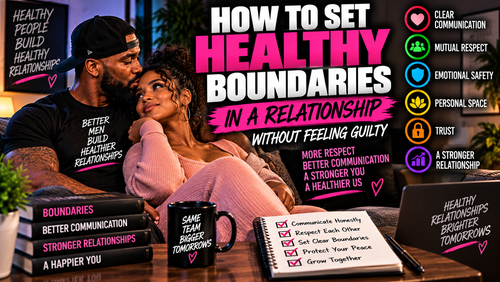
Healthy relationships require boundaries.
Maybe you say:
"I need some time alone."
"Please don't go through my phone."
"I'm not comfortable with that."
"Don't speak to me like that."
"I don't want our private business posted online."
A healthy partner may want to discuss a boundary.
They might not understand it immediately.
There may even be situations where the two of you need to negotiate expectations.
But repeatedly ignoring clearly communicated boundaries is different.
A boundary without respect isn't really being honored.
If you've explained something multiple times and your partner repeatedly crosses that line anyway, pay attention.
2. They Try to Control You
Control can initially disguise itself as concern.
"I don't think you should wear that."
Then:
"Why are you going out with them?"
Then:
"I don't want you talking to that person."
Then:
"Give me your password."
Then:
"You don't need to go anywhere without me."
A partner having an opinion isn't automatically controlling.
But a pattern of trying to dictate your clothing, friendships, movements, communication, finances, work, or personal decisions can be a serious relationship red flag.
You're in a relationship.
You're not somebody's property.
Love involves partnership—not ownership.
3. Jealousy Becomes Their Personality
A little jealousy can happen in relationships.
We're human.
But extreme jealousy isn't proof that somebody loves you more.
Constant accusations.
Interrogations.
Checking your phone.
Monitoring social media.
Demanding your location.
Assuming every coworker wants you.
Getting angry because somebody looked at you.
Creating arguments over innocent interactions.
That's not automatically romance.
That's insecurity being allowed to run the relationship.
Healthy trust doesn't require somebody to prove their innocence every day.
4. They Lie Constantly
Trust is one of the foundations of a strong relationship.
And lies destroy trust one brick at a time.
We're not talking about:
"Yes baby, your cooking was great."
when that chicken was fighting for its life. 😂
We're talking about repeated dishonesty about things that matter.
Money.
Where they've been.
Who they're talking to.
Commitments.
Addictions.
Debt.
Infidelity.
Major decisions.
Promises.
When lying becomes a pattern, eventually you stop asking:
"Is this true?"
and start wondering:
"Which part isn't true?"
That's exhausting.
Trust can sometimes be rebuilt after dishonesty.
But rebuilding requires accountability, transparency, changed behavior, and time.
Words alone aren't enough.
5. Every Problem Somehow Becomes Your Fault
You bring up something that hurt you.
Ten minutes later?
You're apologizing.
Wait...
How did we get here? 😂
That's something to notice.
Healthy partners can accept responsibility.
They can say:
"I was wrong."
"I shouldn't have done that."
"I understand why that hurt you."
Nobody gets everything right.
But if your partner is somehow never responsible for anything, that's a problem.
Every argument can't always be:
Your fault.
Your insecurity.
Your attitude.
Your sensitivity.
Your misunderstanding.
Your mistake.
Accountability needs to exist on both sides.
6. They Constantly Put You Down
Sometimes couples joke with each other.
That's normal.
But there's a difference between playful teasing and repeatedly humiliating someone.
Pay attention when your partner constantly attacks:
Your appearance.
Weight.
Intelligence.
Career.
Income.
Family.
Goals.
Sexual performance.
Parenting.
Education.
Insecurities.
Especially if you've already explained that it hurts.
A partner shouldn't need to destroy your confidence to maintain their own.
You should feel respected by the person who claims to love you.
That doesn't mean your partner must constantly praise you.
It means criticism shouldn't become cruelty.
7. They Try to Isolate You
This is one of the more serious warning signs in a relationship.
Your partner suddenly has a problem with everybody.
Your friends?
Bad influences.
Your family?
They don't respect the relationship.
Coworkers?
Suspicious.
Hobbies?
Waste of time.
Eventually your world becomes smaller and smaller until nearly everything revolves around one person.
Isolation can make unhealthy relationships harder to recognize because you've lost outside perspectives and support.
A healthy relationship doesn't require abandoning every meaningful connection outside the relationship.
Partners can absolutely have legitimate concerns about certain people.
But:
"I don't like this particular situation."
is different from:
"I want you disconnected from everybody except me."
8. They Use Breaking Up as a Weapon
Every argument ends with:
"Maybe we should just break up."
"I'll leave."
"We're done."
Then tomorrow?
Everything's normal.
Until the next disagreement.
Constantly threatening the relationship creates instability.
It teaches both people that any disagreement could destroy everything.
Sometimes a breakup genuinely needs to be discussed.
But using separation as a weapon to win arguments is different.
Healthy conflict should move toward:
Solving the problem.
Not:
Terrifying the other person into surrendering.
9. They Don't Support Your Growth
You're trying to get healthier.
They mock you.
You start saving money.
They pressure you to spend.
You go back to school.
They complain you're "acting different."
You start a business.
They tell you it'll fail.
You stop drinking.
They constantly pressure you to drink.
You become more disciplined.
Suddenly:
"You think you're better than everybody."
Pay attention.
A strong partner doesn't need to participate in every goal you pursue.
But they shouldn't repeatedly sabotage your attempts to improve your life.
Healthy love leaves room for growth.
The person you are today shouldn't have to remain exactly the same forever just to keep somebody comfortable.
10. You No Longer Feel Safe Being Honest
This one can tell you a lot.
You start filtering everything.
Not because you're trying to communicate thoughtfully.
Because you're afraid.
Afraid they'll explode.
Afraid they'll punish you.
Afraid they'll humiliate you.
Afraid they'll threaten you.
Afraid they'll twist your words.
Afraid they'll give you days of silent treatment.
So you stop communicating.
You say:
"Nothing's wrong."
even when everything is wrong.
That's not healthy communication.
You should be able to bring concerns into your relationship without constantly fearing retaliation.
Red Flags vs. Normal Relationship Problems
This distinction is important.
Not every irritating behavior is a red flag.
Your partner forgetting to take out the trash isn't necessarily toxic.
Your partner needing alone time isn't automatically emotionally unavailable.
Having an argument doesn't mean you're incompatible.
Being annoyed with each other occasionally doesn't mean the relationship is failing.
Normal relationship problems might include:
Different cleaning habits.
Different hobbies.
Scheduling conflicts.
Minor communication mistakes.
Different preferences around social activities.
Occasional misunderstandings.
Those things can often be negotiated.
Red flags become more concerning when there's a repeated pattern involving disrespect, control, dishonesty, fear, manipulation, coercion, or harm.
Look at patterns.
Not isolated screenshots of someone's worst Tuesday.
Pay Attention to How Conflict Gets Resolved
Every couple will disagree.
The real question is:
What happens afterward?
Healthy conflict can eventually produce:
Understanding.
Apologies.
Compromise.
Behavior changes.
Better communication.
Unhealthy conflict often produces:
Fear.
Revenge.
Threats.
Humiliation.
Manipulation.
Stonewalling.
Violence.
Or the exact same problem repeating endlessly without accountability.
Don't only judge your relationship by how good the good days feel.
Look at how the two of you handle the difficult days.
That's where relationship strength is tested.
Watch Actions More Than Apologies
Somebody can apologize beautifully.
Flowers.
Texts.
Tears.
Promises.
"I'll never do it again."
Then two weeks later...
Same behavior.
Then another apology.
At some point, you need to stop measuring remorse by words.
Measure it by:
Changed behavior.
A meaningful apology usually includes:
Recognition.
Responsibility.
Repair.
And effort to prevent the behavior from continuing.
If the apology keeps repeating but the behavior never changes?
The apology has become part of the cycle.
Love Isn't Supposed to Require Losing Yourself
Relationships involve compromise.
Absolutely.
Sometimes you sacrifice.
Sometimes your partner sacrifices.
Sometimes you do something you wouldn't normally choose because it matters to the person you love.
That's partnership.
But compromise shouldn't gradually erase your entire identity.
You should still be able to:
Have goals.
Maintain appropriate friendships.
Develop interests.
Take care of yourself.
Grow professionally.
Grow financially.
Grow physically.
Grow mentally.
The right relationship shouldn't require you to become smaller.
Ideally, both people help each other Become More.
Don't Ignore Financial Red Flags
Relationships and money are deeply connected.
Pay attention to:
Secret debt.
Hidden accounts.
Constant reckless spending.
Gambling problems.
Stealing money.
Using your identity or credit without permission.
Refusing to discuss major shared expenses.
Repeatedly creating financial emergencies and expecting you to rescue them.
Money disagreements are normal.
Financial deception isn't something to casually ignore.
If you're building a future together, you eventually need to be able to talk honestly about money.
Don't Confuse Intensity With Compatibility
This one catches people.
You meet somebody.
Instant chemistry.
Text all night.
See each other constantly.
Everything moves FAST.
Three weeks later you're talking about forever.
Intensity feels incredible.
But intensity doesn't automatically equal compatibility.
You still need time to learn:
How they handle anger.
How they manage money.
How they treat strangers.
How they behave under stress.
How they communicate.
Whether their words match their actions.
How they treat family.
Whether your long-term goals align.
Chemistry starts relationships.
Character helps sustain them.
Give yourself time to observe both.
What About Social Media Relationship Advice?
Be careful.
The internet has turned relationships into two extremes.
One side says:
"Never leave. Fight for love no matter what."
The other says:
"They forgot your Starbucks order? RED FLAG. RUN!" 🚩😂
Real relationships require more nuance.
People make mistakes.
People grow.
People change.
People sometimes need counseling.
Some relationships can recover from serious problems.
Others shouldn't continue.
The goal isn't blindly staying or blindly leaving.
The goal is accurately understanding what's happening.
The EBM Relationship Audit
Ask yourself these questions:
1. Can I be myself around this person?
2. Can I communicate honestly?
3. Are my boundaries respected?
4. Can both of us admit when we're wrong?
5. Do I trust their words and actions?
6. Do we support each other's growth?
7. Can we disagree without becoming cruel?
8. Do I feel valued?
9. Am I becoming healthier—or constantly becoming smaller?
10. Does this relationship generally add peace, partnership, and support to my life?
No relationship will score perfectly every day.
That's not the standard.
You're looking at the overall pattern.
Some Red Flags Require More Than Better Communication
This part matters.
Physical violence, sexual coercion, stalking, credible threats, severe intimidation, and coercive control aren't problems you should try to solve with another cute "relationship communication exercise."
Safety comes first.
If you're experiencing abuse or believe you may be in danger, consider reaching out to trusted people and qualified local or professional resources who can help you plan safely.
Don't assume confronting an abusive partner is always safe.
Sometimes the smartest next step isn't winning the argument.
It's protecting yourself.
Your Relationship Shouldn't Be Perfect
Perfect relationships don't exist.
Two imperfect people are going to create imperfect moments.
The standard isn't:
Never argue.
It's:
Can we argue respectfully and repair afterward?
The standard isn't:
Never make mistakes.
It's:
Can we take responsibility and change?
The standard isn't:
Always agree.
It's:
Can we disagree without disrespecting each other?
That's healthy.
The Green Flags Matter Too
Don't become so obsessed with detecting red flags that you forget to recognize good relationships.
Look for someone who:
Keeps their word.
Communicates.
Respects boundaries.
Apologizes.
Supports your goals.
Celebrates your wins.
Shows up during difficult seasons.
Makes you laugh.
Listens.
Tells you the truth.
Allows you to be yourself.
Protects your trust.
Works through problems.
Those behaviors deserve attention too.
Because healthy love isn't simply the absence of bad behavior.
It's the presence of good behavior repeated consistently.
The EBM Relationship Rule
Here's the principle:
LOVE + RESPECT + TRUST + COMMUNICATION + GROWTH
Love without respect becomes painful.
Love without trust becomes exhausting.
Love without communication becomes confusing.
Love without growth can become stagnant.
You want all five working together.
Not perfectly.
Consistently.
Becoming More Includes Who You Choose
Personal development isn't only:
Building muscle.
Making money.
Reading books.
Starting businesses.
Waking up early.
It's also learning:
Who deserves access to you.
What behavior you'll accept.
How you communicate.
How you treat your partner.
How you establish boundaries.
How you recognize unhealthy patterns.
And how to become a healthier partner yourself.
Because here's the part nobody likes talking about:
Sometimes we're the red flag.
Maybe you're controlling.
Maybe you're jealous.
Maybe you don't listen.
Maybe you lie.
Maybe you shut down during conflict.
Maybe you constantly criticize.
Growth requires enough humility to examine your own behavior too.
Ask:
"Would I want to be in a relationship with me?"
That's a powerful question.
Don't Just Find Better. Become Better.
You can't control another person's behavior.
But you can control what you accept and what you bring into a relationship.
Learn to communicate.
Keep your word.
Protect trust.
Respect boundaries.
Apologize when you're wrong.
Listen.
Support growth.
And expect those same basic standards in return.
Relationships should be a place where two people can grow—not a place where one person slowly disappears.
Choose wisely.
Love intentionally.
Pay attention to patterns.
Protect your peace.
And keep becoming a better partner and a stronger version of yourself.
Because who you build your life with matters.
Healthy love helps both people Become More.
That's how you EvolvE.
EvolvE Become More
Helping You Become More Every Day.