9 Signs of a Healthy Relationship: How to Build Love That Actually Lasts

Everybody wants a good relationship.
But what does healthy love actually look like?
Social media can make relationships look like vacations, matching outfits, date nights, expensive gifts, and smiling pictures.
That's the highlight reel.
Real relationships happen when the camera is off.
They're built during disagreements.
Financial pressure.
Stressful weeks.
Career changes.
Family problems.
Personal growth.
Bad moods.
Mistakes.
Ordinary Tuesday nights when absolutely nothing exciting is happening.
A healthy relationship isn't one where two people never have problems.
It's one where two people learn how to handle problems without destroying each other in the process.
So whether you're dating, married, or thinking about what you want from your next relationship, here are nine signs of a healthy relationship worth paying attention to.
1. You Can Be Your Real Self
One of the biggest signs of a healthy relationship is feeling comfortable being yourself.
You shouldn't have to perform 24/7.
You shouldn't constantly wonder:
"If they knew the real me, would they still want me?"
A healthy partner won't love every habit you have.
They're allowed to disagree with you.
They're allowed to challenge you.
But you should still feel accepted as a person.
You can laugh differently.
Have weird hobbies.
Express opinions.
Admit fears.
Talk about dreams that aren't fully figured out yet.
A strong relationship gives both people room to say:
"This is who I am—and I'm still growing."
That's powerful.
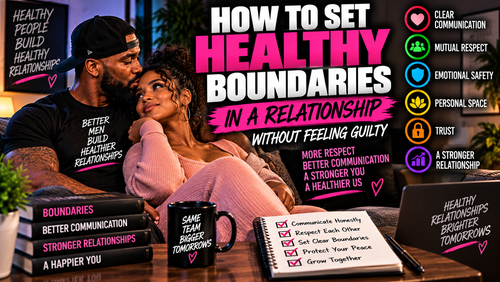
2. Your Boundaries Are Respected
Love does not erase boundaries.
Healthy relationships need them.
A boundary simply communicates:
"This is what I'm comfortable with, and this is what I'm not."
Those boundaries can involve money, privacy, family, social media, physical affection, communication, friendships, personal time, or dozens of other areas.
And here's the important part:
You should be able to say no.
No shouldn't automatically start a war.
Your partner doesn't have to agree with every boundary without discussion, but neither person should rely on intimidation, manipulation, threats, or guilt to get around the other's limits.
Healthy boundaries aren't walls keeping your partner away.
They're rules helping two individuals live together without losing themselves.
3. You Feel Safe Communicating
Communication is bigger than talking.
Plenty of couples talk all day and still don't communicate well.
Healthy communication means being able to express what you're actually thinking.
"That hurt me."
"I'm worried about money."
"I need some time alone."
"I don't agree."
"I messed up."
"I need your help."
And here's the harder part:
Listening when your partner says those things too.
Not preparing your comeback.
Not immediately defending yourself.
Not trying to win.
Listening.
Sometimes your partner isn't attacking you.
They're trying to help you understand their experience.
A strong relationship creates enough emotional safety for difficult conversations to happen before resentment has years to grow.
4. Support Isn't Only Available During Good Times
Everybody loves celebrating wins.
The promotion.
The new business.
The weight loss.
The graduation.
The big check.
The vacation.
But relationships aren't tested only when life is going right.
They're tested when somebody loses the job.
When the money gets tight.
When a dream fails.
When confidence disappears.
When somebody is grieving.
When life simply isn't going according to plan.
Healthy support doesn't mean solving every problem for your partner.
Sometimes it means:
"I don't know how to fix this, but you're not facing it alone."
That's partnership.
5. Conflict Doesn't Automatically Mean the Relationship Is Broken
This one is important.
Healthy couples disagree.
You are two different human beings with different childhoods, personalities, experiences, expectations, and ways of seeing the world.
Of course you're going to disagree sometimes.
The question isn't whether you argue.
It's:
How do you argue?
Do disagreements become insults?
Threats?
Humiliation?
Silent punishment?
Scorekeeping?
Dragging up something from 2017 that supposedly got resolved six years ago? 😂
Or can you eventually get back to:
"Okay. What's the actual problem, and how do we solve it?"
The objective shouldn't be me vs. you.
It should be:
Us vs. the problem.
That one mindset shift can change how couples handle conflict.
6. You Grow Together Without Controlling Each Other
A healthy relationship should have room for evolution.
The person you met at 25 probably won't be exactly the same at 35.
And shouldn't be.
People grow.
Priorities change.
Careers change.
Interests change.
Goals change.
A good partner doesn't demand that you stay frozen in the version of yourself they originally met.
They encourage growth.
Maybe one person decides to get healthier.
Start a business.
Go back to school.
Learn something new.
Become more disciplined.
Work through old habits.
A strong relationship says:
"I'm excited to see who you're becoming."
But there's a difference between encouraging growth and trying to redesign your partner into someone you prefer.
Love should help somebody become more of themselves, not less.
That's pure EBM.
7. Trust Is Built—and Protected
Trust isn't just about cheating.
It's much bigger.
Can I trust your word?
Can I trust you with money?
Can I trust you when I'm vulnerable?
Can I trust you to tell me something difficult?
Can I trust you when nobody else is watching?
Can I trust that private things I tell you won't become ammunition during our next argument?
Trust is built through thousands of small interactions.
Keeping promises.
Telling the truth.
Showing up.
Being consistent.
Taking responsibility.
Doing what you said you'd do.
And once you've built trust, protect it.
Because trust can take years to build and only a few reckless decisions to seriously damage.
8. Appreciation Is Expressed
One of the easiest relationship habits to neglect is simply saying:
"I appreciate you."
Over time, people can start treating extraordinary things as ordinary.
The meal magically appears.
The laundry magically gets done.
The bills magically get paid.
The kids magically get where they're supposed to go.
The house magically stays together.
Somebody keeps doing the invisible work.
Notice it.
Say thank you.
Compliment your partner.
Celebrate them.
Send the random text.
Bring home something small because you thought about them.
Make their coffee.
Tell them they look good.
Ask about their day—and actually listen.
You don't need a $5,000 vacation every month to keep love alive.
Sometimes:
"I see everything you do for us."
means more.
9. Love Becomes a Daily Choice
Relationships usually begin with feelings.
Excitement.
Chemistry.
Butterflies.
Wanting to spend every waking second together.
But long-term love eventually requires something deeper.
Choice.
Because there will be mornings when nobody has butterflies.
Some days you're tired.
Some days your partner annoys the hell out of you.
Some seasons are stressful.
Some years are harder than others.
Long-term relationships aren't sustained by expecting every day to feel like the first six months.
They're sustained when both people repeatedly choose behaviors that protect the relationship.
Communication.
Affection.
Loyalty.
Respect.
Patience.
Forgiveness where appropriate.
Time.
Attention.
Effort.
Love may begin as a feeling, but lasting relationships require action.
A Healthy Relationship Isn't a Perfect Relationship
This is where social media can mess people up.
You see another couple's vacation pictures and compare them to an argument you had Tuesday night.
But you don't know what happened before their picture.
Or afterward.
Stop comparing your behind-the-scenes life to somebody else's highlight reel.
Healthy doesn't mean perfect.
It means both people are willing to work on what's imperfect.
There will be disagreements.
Miscommunication.
Stress.
Mistakes.
Annoying habits.
The occasional:
"Why did you put the empty container BACK in the refrigerator?!" 😂
That's life.
What matters is the foundation underneath it.
The EBM Relationship Check-In
Here's something couples can actually use.
Once a week or once a month, sit down without phones and ask each other five questions:
1. How are you doing—really?
2. Is there anything I've done recently that bothered you?
3. Is there something you need more of from me?
4. What are we doing well right now?
5. What's something we should work toward together?
Then there's one rule:
Don't punish honesty.
If somebody gives an answer you don't like, resist immediately turning it into an argument.
Otherwise, they'll eventually stop answering honestly.
The purpose of a relationship check-in isn't finding out who's wrong.
It's finding small problems before they become big ones.
Don't Lose Yourself Inside a Relationship
This deserves its own section.
Being part of a couple doesn't mean your individual identity disappears.
Maintain friendships.
Have interests.
Take care of your health.
Keep learning.
Pursue meaningful goals.
Have some independence.
Spend appropriate time alone.
Continue becoming somebody you're proud to be.
Because two healthy individuals have a stronger foundation for building a healthy partnership.
Your relationship should be an important part of your life.
It shouldn't require you to stop having one.
Relationships Are Part of Becoming More
At EvolvE Become More, personal growth isn't only about money, muscles, productivity, or discipline.
It's also about how you treat people.
Especially the people closest to you.
You can make six figures and still be terrible at communicating.
You can have a six-pack and still refuse to apologize.
You can build a successful business and still neglect your partner.
You can read 100 self-improvement books and still refuse to listen.
That's not complete growth.
Real growth should eventually show up in how you love.
How you communicate.
How you handle conflict.
How you respect boundaries.
How you keep your word.
How you show appreciation.
And how you help the person beside you become more without losing who they are.
Because a healthy relationship isn't two perfect people.
It's two imperfect people intentionally building something healthy together.
Respect each other.
Communicate.
Keep growing.
Protect the trust.
Choose each other.
And EvolvE together.
EvolvE Become More
Helping You Become More Every Day.